
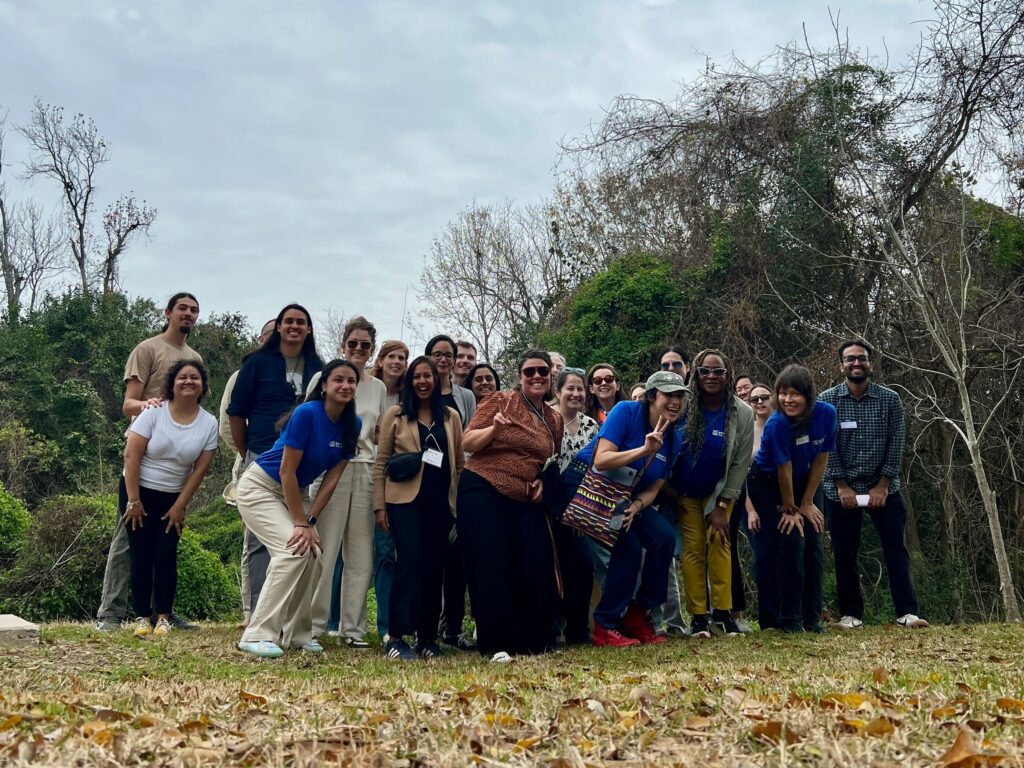
Last week, we led a site visit in Baytown to highlight our work focused on green infrastructure, sewage advocacy, and industrial pollution accountability for urban water funders.
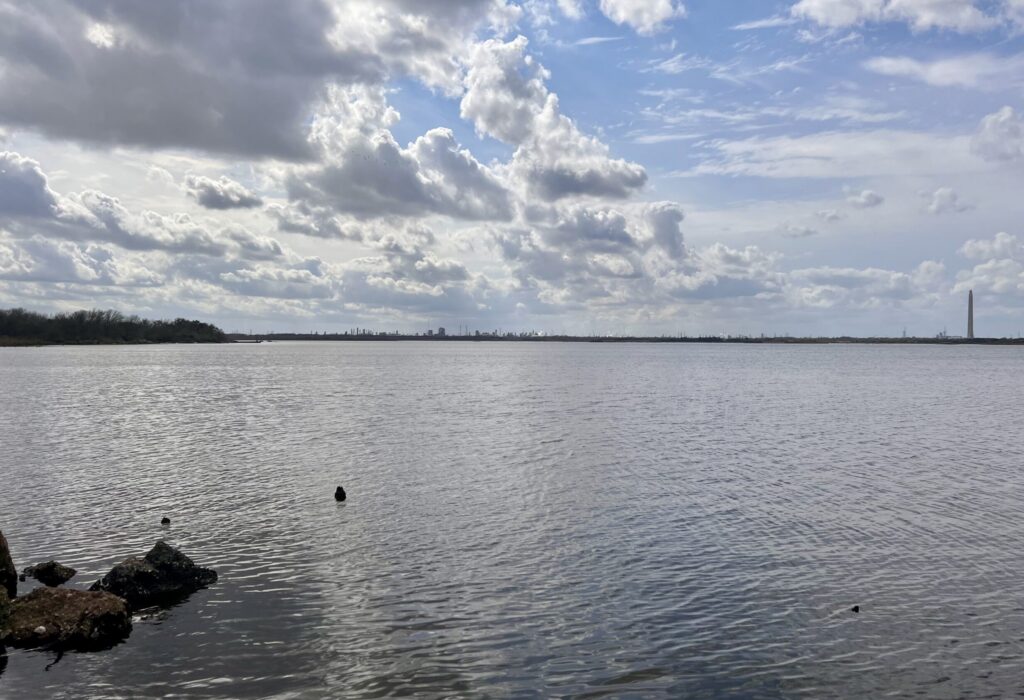
Baytown is an incorporated city within Greater Houston, located roughly 30 miles east of downtown Houston. Named for its proximity to water, specifically the surrounding bays, the city is a hotspot of ecological diversity, as exemplified by restoration efforts of the Baytown Nature Center, which features over 400 acres of tidal marshes, freshwater wetlands, and coastal prairie, providing a habitat for over 300 bird species. Additionally, the city has many natural hotspots thanks to park investment and relative underdevelopment. Baytown is also a hub for the U.S. petrochemical industry, anchored by the ExxonMobil Baytown Complex, one of the largest oil refineries in the country. The city is located along the 50-mile Houston Ship Channel, the busiest man-made waterway for foreign tonnage and petrochemical manufacturing, connecting the Gulf of Mexico to Houston.
Bayou City Waterleeper has named Baytown as one of our “Water Justice Zones,” a region facing compounded water-related injustices that we have defined to include various factors such as sewage, industrial pollution, and flooding, and presenting opportunities for escalated action and investment that can confront these overlapping inequities with community leadership and nature-based approaches.

Through our advocacy in Baytown, we have made progress around clean water and green infrastructure, including holding the EPA accountable for updating industry water pollution control standards, advocating for clean water by addressing sewage pollution, leading community-led visioning and education on green infrastructure through collaborative research and wetland walks. Our work — which includes legal action, policy, community science, organizing, and cultural strategies — has focused on building community power around clean water and flooding, while also educating decision-makers and holding them accountable.
Baytown is a microcosm of the Houston region, where massive industrial power, diverse communities, and fragile, watery ecosystems coexist.
Being in a “water city” like Houston presents an opportunity for philanthropy to shift and support new frameworks around water. Water, environment, and climate funders must shift their strategies to reflect the on-the-ground frameworks that community-based organizations like ours develop to support community power, fill water data gaps, provide more resources to water systems, and expand and rethink water infrastructure, as identified in this article by funders. To truly shift change and build power, funders must also take an ecosystem approach towards environmental action, including legal action, policy shifts, and advocacy, more broadly.
Environmental funders could better integrate climate and water, support industrial pollution accountability, and center racial equity. While water is a crucial pathway for addressing climate resilience, it has historically been overlooked by climate funders, but investments in wetland protection, nature-based solutions, and industrial pollution are what this climate moment needs from philanthropy. Much more support is also needed around Clean Water Act enforcement and industrial pollution accountability to protect public health and our natural resources. Environmental funders can also continue to integrate equity, particularly racial and economic justice, into climate and conservation strategies, recognizing that vulnerable, frontline communities are disproportionately affected by ecological crises. Following George Floyd’s murder in 2020, along with the pandemic, which brought forward health inequities, philanthropy experienced an uptick in commitments for racial equity, with commitments reaching $16.5 billion by some estimates, but only a fraction of these funds were actually distributed. There is also an opportunity for conservation and funding for green infrastructure to center more diverse approaches and communities.
In this political moment, environmental inequities are greater due to reduced environmental oversight, such as regulatory rollback and weakened enforcement, increasing pollution in marginalized, low-wealth, and minority communities. While the Clean Water Act has significantly reduced water pollution and improved water quality, it has been underenforced in places like Baytown and Greater Houston. Over time, it has also faced legal challenges regarding its jurisdictional scope over “waters of the United States,” diminishing wetland protections. Frontline communities like Baytown and other “water justice zones” in Houston face disproportionate exposure to industrial hazards, contaminated air, and water, leading to severe health impacts like asthma, cancer, and premature death. These are injustices that demand solutions.
This is an invitation to funders, as well as decision-makers, to see water and threats to water, ecosystems, and community, and to make space for watery, fluid, interconnected frameworks that center community power-building and reimagine boundaries around environmental protections. Organizations like ours and our partners continue to build community power and hold decision-makers accountable around environmental protections in an increasingly lax regulatory environment. We hope to see funders shift to mobilize resources and support new frameworks to ensure the community and environment are protected in this moment, politically, and at the center of solutions that must move forward, irrespective of political forces.
Bayou City Waterkeeper protects the waters and people of the greater Houston region through bold legal action, community science, and creative, grassroots policy to further justice, health, and safety for our region.