Green Infrastructure Design Lab
A community-led learning and design program helping residents turn lived experience, local knowledge, and green infrastructure tools into flood resilience solutions.
Hilda De la Rosa Márquez
Itohan Wise-Osagie
Jocelyn Ronquillo
Shirley Curtis
Jiterrill Felix
Vick Martinez
2026 Inaugural Cohort
- Community Focus: Kashmere Gardens and Trinity Gardens
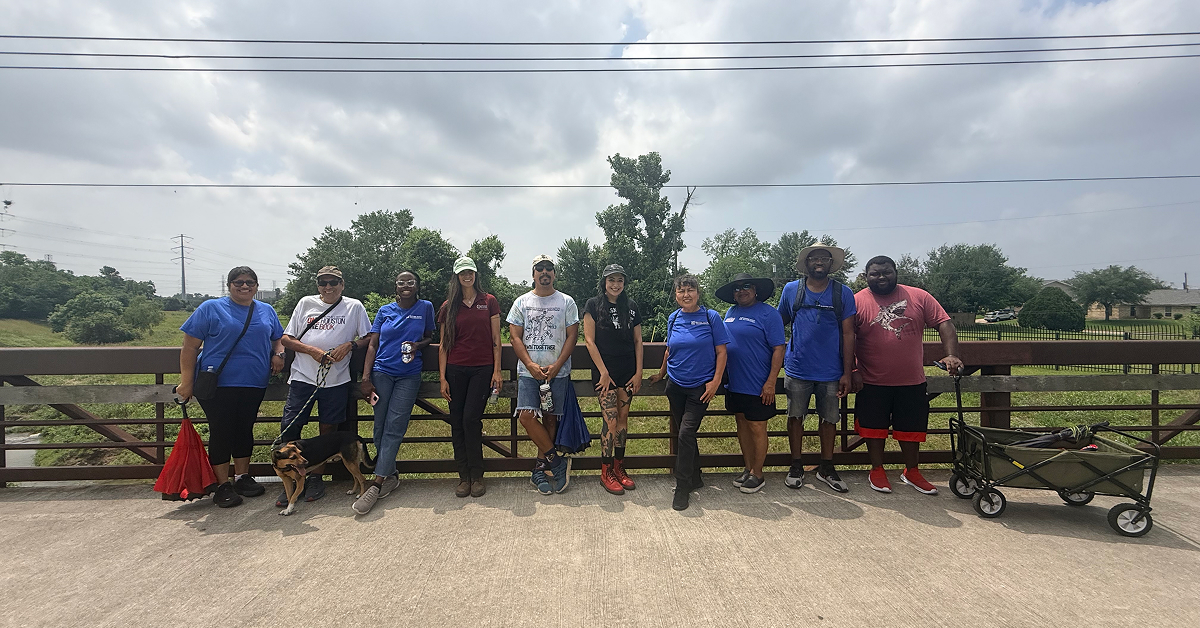
- Cohort members: 11 community members
- Program length: 7 weeks
- Program dates: April 7–May 19, 2026
- Core topics: Flooding, environmental justice, green stormwater infrastructure, policy, advocacy, and community-led solutions
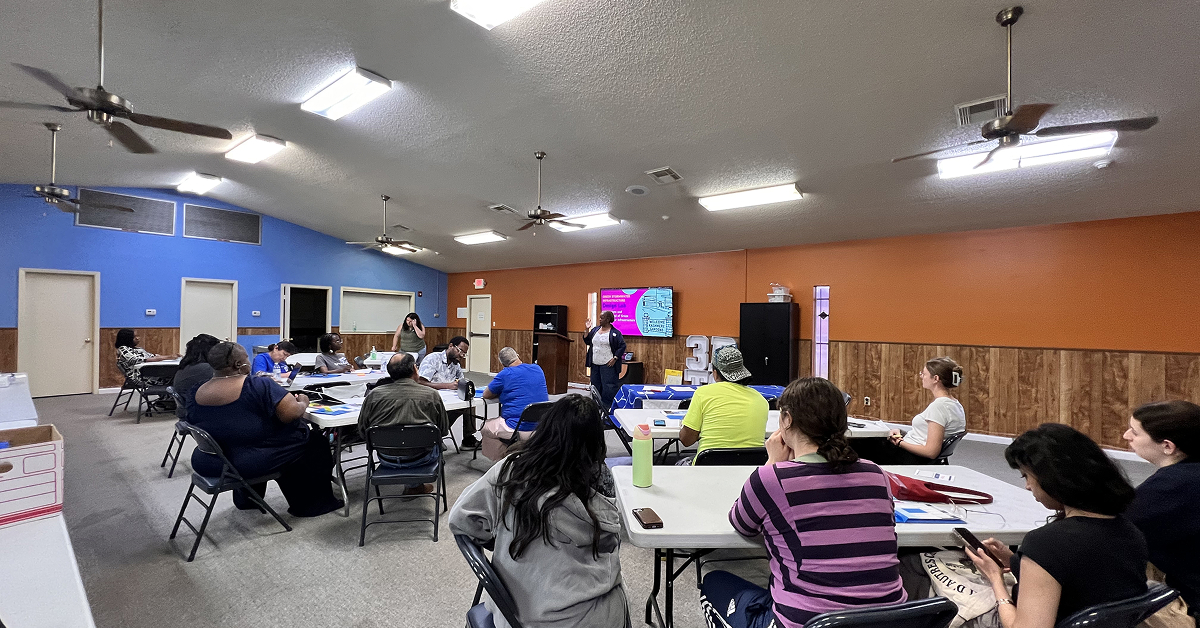
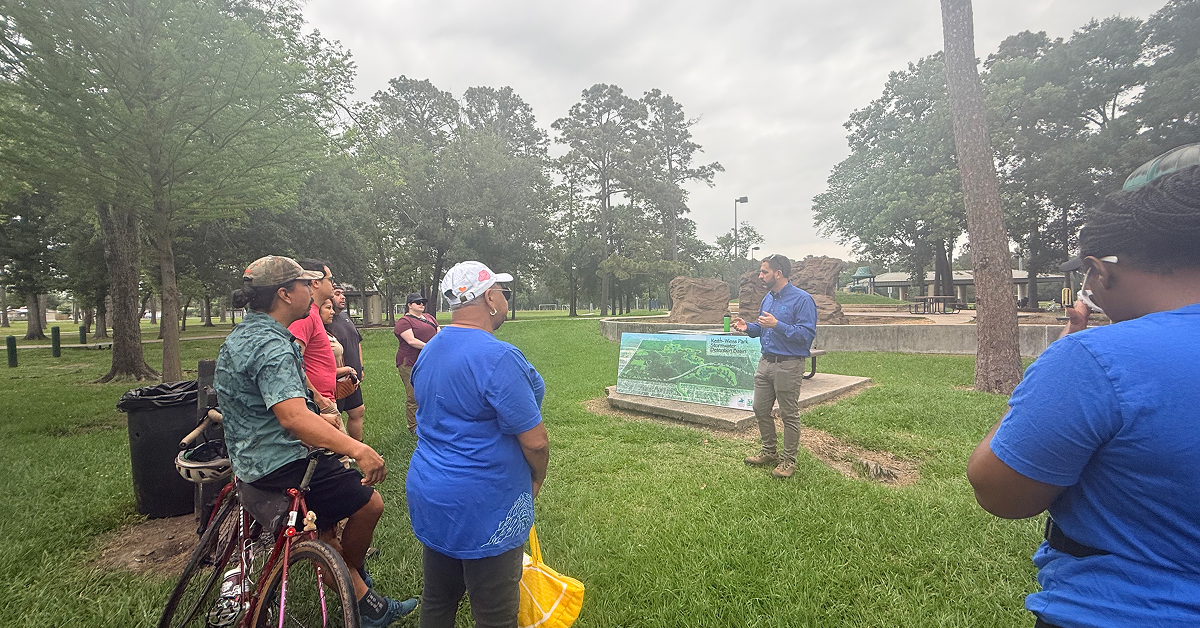
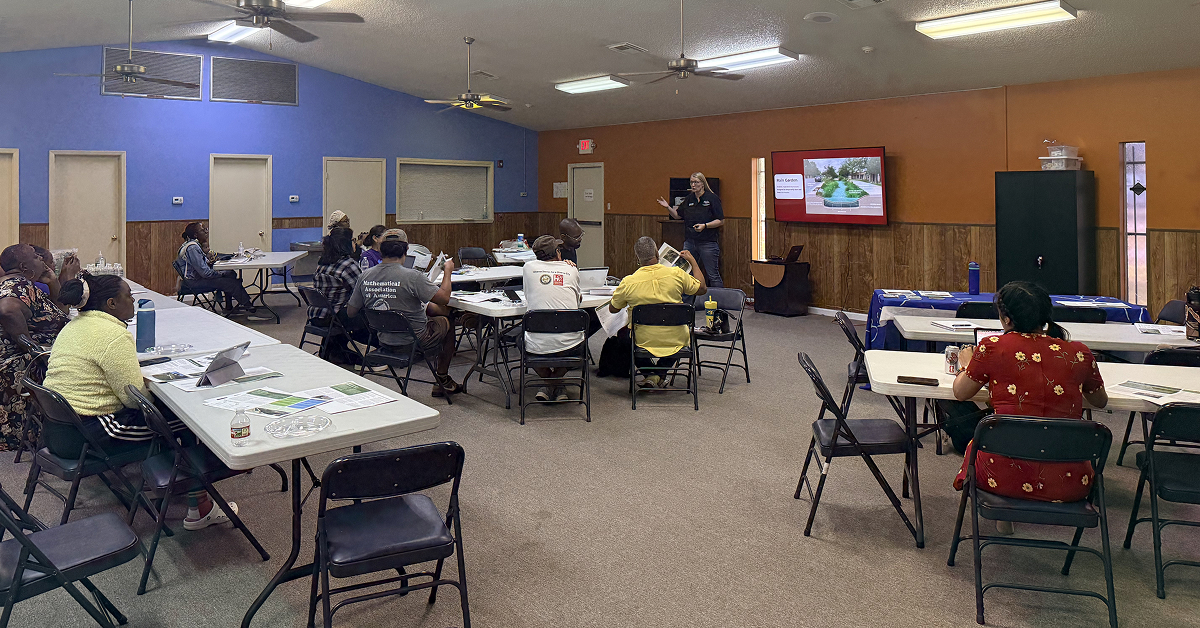
- Activities: Workshops, mapping, site visits, guest speakers, hands-on learning, and project ideation
- Supported by the Rockwell Fund
Our approach
Learn together
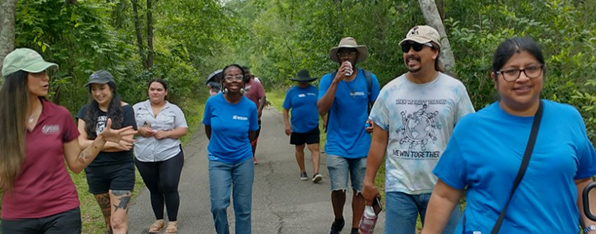
Cohort members explore flooding, environmental justice, green infrastructure, water systems, policy, and neighborhood-scale resilience through workshops and conversations with local experts.
Design what matters
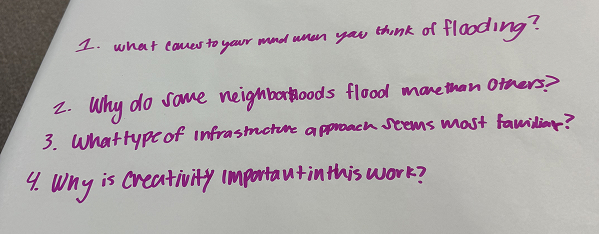
Participants identify existing infrastructure, community assets, flood risks, green spaces, drainage concerns, and opportunities for future investment.
Community as experts

The Design Lab brings together community members, organizers, policy advocates, scientists, attorneys, and green infrastructure practitioners. The goal is not one-way education, but co-learning.
Turn ideas into action

By the end of the program, participants begin developing ideas for projects, advocacy, stewardship, and future community-led flood resilience work.
What the inaugural cohort made possible
The first Design Lab demonstrated the power of a cohort model rooted in trust, shared learning, and community leadership. Participants built relationships with one another, deepened their understanding of green infrastructure and flood resilience, and identified ways to apply what they learned in their own homes, blocks, and neighborhoods.
The program also helped Bayou City Waterkeeper learn from residents. Cohort members shared the language they use to describe water, flooding, drainage, and neighborhood conditions, creating a stronger foundation for future organizing, education, and advocacy.
- Built community knowledge around green stormwater infrastructure and nature-based solutions
- Strengthened relationships among residents, BCWK staff, local experts, and partner organizations
- Created space for residents to connect technical concepts with lived experience
- Supported community members in identifying immediate and long-term flood resilience actions
- Generated lessons that can inform future Design Lab cohorts and community-led infrastructure projects
Why the Design Lab Exists
Kashmere Gardens and Trinity Gardens are communities shaped by water, infrastructure, and long-standing disinvestment. Repeated flooding, under-maintained drainage systems, industrial impacts, limited tree canopy, and gaps in public investment have made flood resilience an urgent community priority.
The Green Infrastructure Design Lab was created to support residents in exploring nature-based solutions that can reduce flood risk while improving health, safety, shade, green space, and quality of life. Unlike traditional infrastructure planning processes that often happen far from the people most affected, the Design Lab starts with community knowledge. Residents bring lived experience, neighborhood history, and practical insight into how water moves through their streets, yards, ditches, parks, and bayous.
Through the Design Lab, Bayou City Waterkeeper connects community education, science, policy, and advocacy so residents can better understand green stormwater infrastructure, identify local opportunities, and help shape solutions for their own neighborhoods.
This aligns well with the grant language describing the Design Lab as a flexible framework for community members to problem-solve water-related, green, and nature-based design solutions while addressing underinvestment in water and green infrastructure in under-resourced communities.
What is green stormwater infrastructure?
Green stormwater infrastructure uses plants, soil, trees, gardens, wetlands, and other nature-based systems to help slow, absorb, filter, and redirect stormwater. These solutions can work alongside traditional drainage systems while also creating cooler, healthier, more livable neighborhoods.
- Rain gardens
- Bioswales
- Trees and urban forestry
- Restored floodplains
- Community gardens
- Native plants and natural vegetation
- Curb cuts that direct water into planted areas
- Parks and green spaces designed to hold water safely
In the Design Lab, participants explored not only what these tools are, but how they could work in the specific conditions of Kashmere Gardens and Trinity Gardens.
Inside the Design Lab