This past spring, Bayou City Waterkeeper launched its first cohort of our inaugural Green Infrastructure Design Lab in Kashmere Gardens and Trinity Gardens. Held from April 7 through May 19, the community-centered program brought residents together to explore how green infrastructure, neighborhood knowledge, and collective advocacy can support more equitable solutions to flooding.
Supported by the Rockwell Fund, BCWK’s Design Lab was inspired by the Water Leaders Institute in New Orleans, LA, as well as the Stormwater Infrastructure Resilience and Justice (SIRJ) Lab at the University of Maryland. It began with a guiding principle: people who live with flooding, drainage challenges, aging infrastructure, and environmental burdens hold essential knowledge and embody water literacy to learn more about the places they call home. Rather than treating community members as passive recipients of technical information, the program created space for community members to learn from experts in the field of green infrastructure, share their own experiences, and empower them to shape conversations about flood resilience in their own communities.
Learning Beyond A Traditional Classroom
Throughout the program, cohort members participated in workshops, mapping activities, policy discussions, site visits, guest presentations, and interactive learning experiences. The curriculum introduced participants to different types and scales of green stormwater infrastructure and nature-based solutions, including rain gardens, bioswales, native plants, wetlands, trees, and other approaches that can slow, absorb, and redirect stormwater.
Participants also explored how water moves through neighborhoods and how infrastructure, public policy, environmental justice, and decision-making are all connected. BCWK designed this curriculum to combine science, policy, data, legal advocacy, community engagement, and lived experience to build a foundation from which the cohort could design their own solutions at personal and communal levels.
For many participants, the hyper local focus made the experience especially meaningful. Site visits and neighborhood examples helped our cohort members see familiar streets, parks, drainage systems, and green spaces in new ways. One participant described feeling “like a tourist in my own city and neighborhood” while learning more about nearby infrastructure and environmental conditions.
Building Relationships and Community Leadership
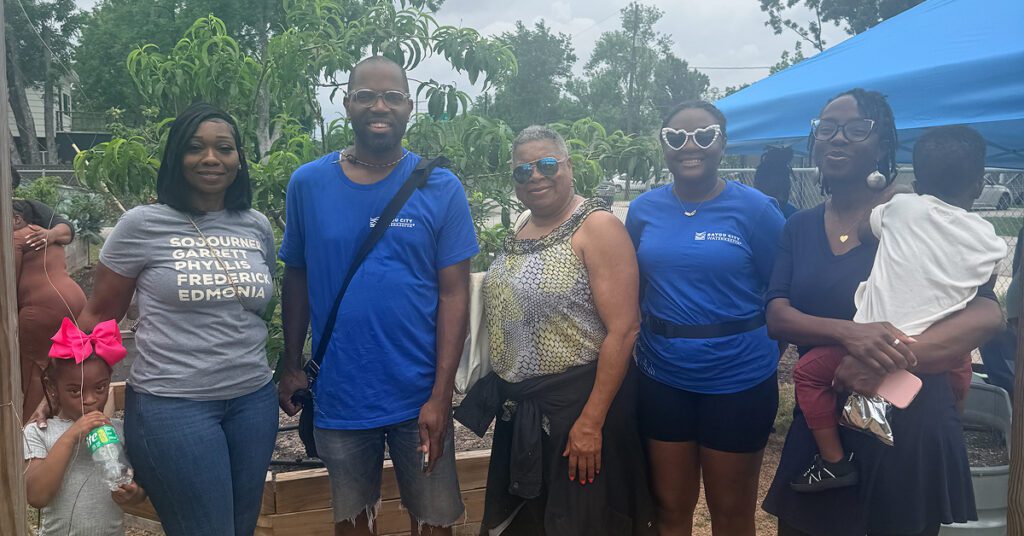
Over the course of the program, the Design Lab became more than a series of educational sessions. Cohort members built relationships with neighbors, exchanged personal stories about flooding and infrastructure, and learned from one another. In survey responses at the end of the cycle, participants consistently identified those relationships, along with practical resources, field experiences, and expert presentations, as some of the program’s greatest strengths.
Throughout the program, we also prioritized two-way learning. Community members introduced their own ways of describing water and infrastructure, such as “sponge gardens” and the “dip at the end of my street.” These descriptions helped connect technical concepts to everyday observations and reinforced that community language and expertise belong in conversations about environmental solutions.
Participant feedback showed that members left the program with greater confidence, stronger connections, and a clearer sense of what action could look like. One participant shared that the Design Lab helped them recognize steps they could take “on a personal and communal level” to advance green stormwater infrastructure as a flood solution.

Looking Toward the Next Phase
The inaugural Design Lab created a strong foundation for future community-led learning and action. Participants expressed interest in more hands-on projects, deeper exploration of design and implementation, continued gatherings, and opportunities to practice advocacy with decision-makers.
As Bayou City Waterkeeper builds on this first cohort, the goal is to continue investing in relationships, supporting resident leadership, and creating pathways for community ideas to move from learning into action. The Design Lab demonstrated what is possible when technical expertise and community wisdom flow together: residents become better equipped not only to imagine solutions, but also to organize, advocate, design, and lead change in their communities.
Thank you to our cohort members Hilda De la Rosa Márquez, Alejandro Perez, Vick Martinez, Jocelyn Ronquillo, Keisha Holman, Jiterrill Felix, Itohan Wise-Osagie, Alberta Cotton, Jiterrill Felix, Shirley Curtis and our Design Lab Coordinator, Sade Hogue, for making this cohort such a meaningful and memorable experience for everyone. To learn more about our cohort, please visit: https://bayoucitywaterkeeper.org/green-infrastructure-design-lab/.
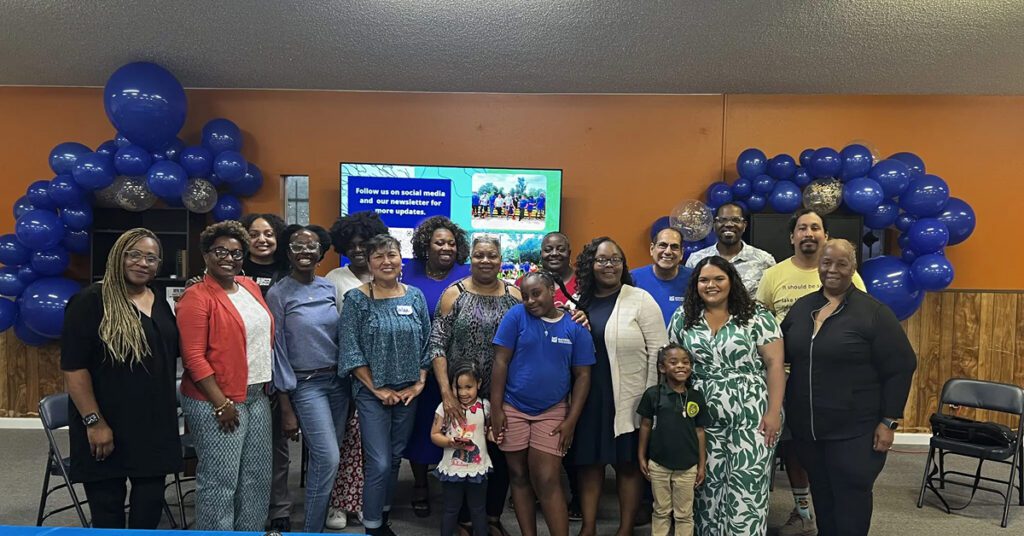
Bayou City Waterkeeper would like to send a special thanks to our funders, Rockwell Fund, and our partners, Harris County Flood Control District, Texas A&M Green Infrastructure for Texas Team, Houston Parks and Recreation Department, Northeast Houston, for helping our cohort learn, connect, and explore community-centered green infrastructure solutions.