When communities in Houston’s historically underinvested neighborhoods experience raw sewage overflows or lack access to safe drinking water, they are facing systemic inequities in how water infrastructure funding has been distributed for decades. Bayou City Waterkeeper has been working to change that through comprehensive advocacy on the State Revolving Fund (SRF) programs that allocate millions of dollars annually for water infrastructure projects across Texas.
State Revolving Fund 2026 comments
This month, we submitted formal comments to the Texas Water Development Board (TWDB) on their State Fiscal Year 2026 Drinking Water and Clean Water State Revolving Fund Intended Use Plans. This is a major, annual component of our multi-year advocacy work to make these critical funding programs more equitable and effective for communities that need them most.
Our formal comments on the SFY 2026 Intended Use Plans build on years of advocacy and relationship-building to propose specific, actionable reforms. Our key recommendations include:
Enhanced Disadvantaged Community Scoring: Moving beyond simple income thresholds to develop a comprehensive, multi-dimensional scoring system that incorporates environmental health disparities, infrastructure burdens, and social vulnerability factors. Wisconsin’s model, which uses six key metrics including population size, median household income, poverty rates, population trends, unemployment, and income distribution, provides a blueprint for more nuanced community assessment.
Census Tract-Level Analysis: Current TWDB methodology averages income across entire municipal service areas, masking pockets of severe disadvantage within large cities like Houston. Public data from Houston Public Works shows neighborhoods that qualify as disadvantaged communities (DAC) at the census block group level but cannot access benefits because city-wide income averaging exceeds state thresholds (Annual Median Household Income at or below 75%). Adopting census tract analysis for DAC qualification would ensure infrastructure projects serving historically underinvested neighborhoods receive appropriate prioritization.
Maximized Principal Forgiveness: Implementing a sliding scale from 30% to 100% based on community need rather than the current, largely binary approach. With $20.6 million in unallocated principal forgiveness capacity across both programs, Texas may be missing opportunities to provide additional subsidization to communities that need it most.
Strategic Set-Aside Utilization: Expanding technical assistance programs through administrative set-aside funds to address diverse capacity-building needs, including bilingual application assistance, additional financial management support, and workforce development initiatives.
Strengthened Green Project Reserve: Implementing more robust incentives for nature-based solutions that demonstrate quantifiable, long-term operational cost savings and measurable co-benefits.
Enhanced Transparency: Establishing publicly accessible dashboards showing project progress, funding disbursement, completion metrics, and geographic distribution of investments, along with regular community-level impact assessments.
What’s next?
The SFY 2026 IUPs represent a critical transition point as federal IIJA supplemental funding concludes and state funding mechanisms become increasingly important for maintaining infrastructure investment momentum. Our advocacy work will continue through multiple channels:
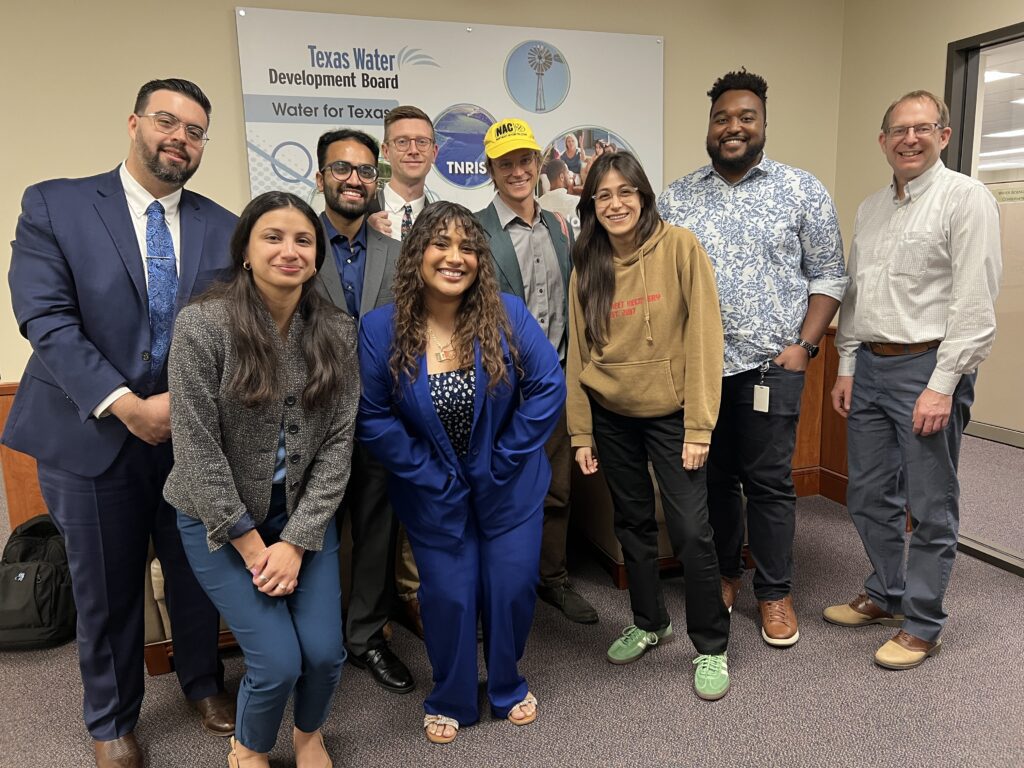
We’ll continue engaging with TWDB staff to ensure the agency considers our recommendations into final IUPs and future program modifications by providing ongoing feedback. As an immediate next step, BCWK will be working with state partners to host a workshop with TWDB this fall to further discuss our recommendations around disadvantaged community scoring.
We’ll continue to work with local communities and utilities to prepare competitive applications for SRF funding, ensuring they can effectively navigate program requirements and maximize their chances of securing critical resources.
Finally, with the Texas Water Fund constitutional amendment, Proposition 4, appearing on the November 2025 ballot, we’re preparing voter education efforts to secure approval for $20 billion in water infrastructure funding through 2047.
We’ll continue strengthening relationships with other advocacy organizations, community groups, and technical experts to ensure our recommendations reflect the full range of community and technical needs.
Looking ahead
Our goal is to improve the way Texas distributes and prioritizes water infrastructure funding for communities in need. This requires continued engagement with the Texas Water Development Board during their review process, coordination with federal advocates to ensure state implementation aligns with national best practices, and ongoing community organizing to maintain a push for meaningful reform.
You can read our full SFY2026 SRF public comment letter here for detailed analysis and recommendations.
For more information about BCWK’s SRF advocacy work or to get involved in upcoming efforts, contact Usman Mahmood at usman@bayoucitywaterkeeper.org or Guadalupe Fernandez at guadalupe@bayoucitywaterkeeper.org.