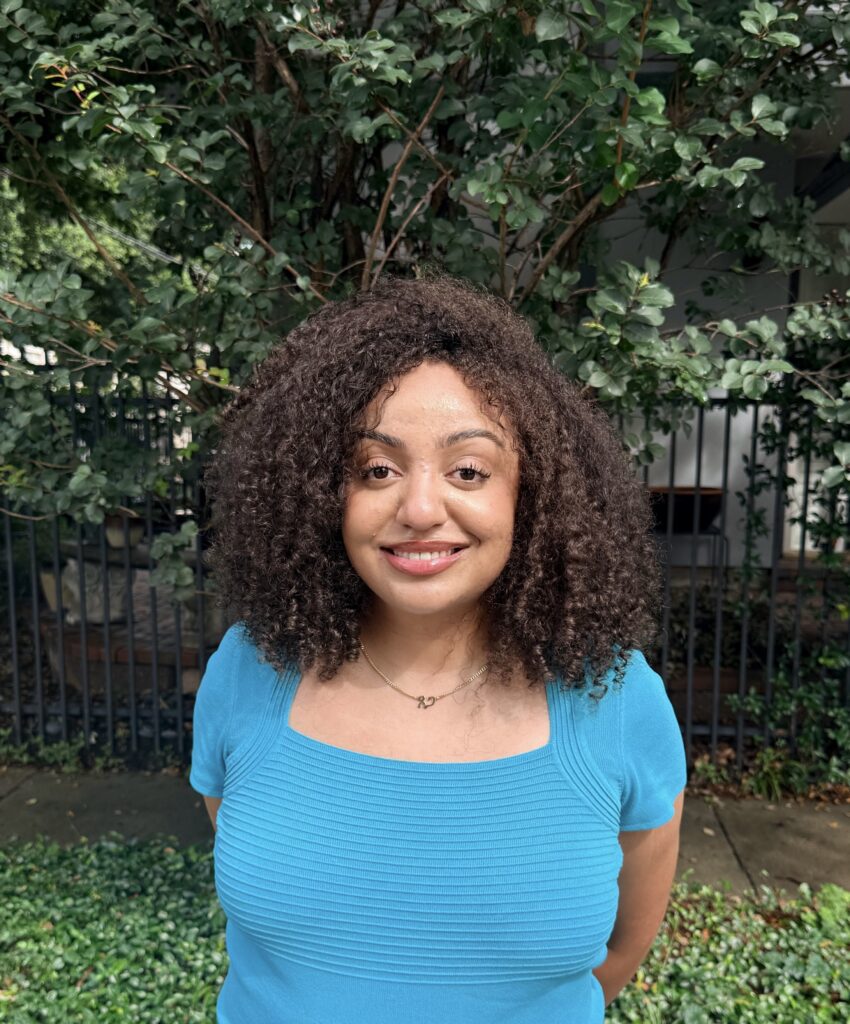
Join us in welcoming our new staff member, Gracie Israel, Community Organizer. Gracie will expand our grassroots effort by raising awareness of water justice and climate issues, building relationships with community members across our region, and allowing community expertise to inform our work. She will also support our existing community-centered policy work. Learn more about Gracie.
What is the last waterbody that you visited?
This past March, I took a trip to Seattle and hiked my tallest mountain yet near the Wilderness Rim, and let me tell you, I earned that view. By the time we reached the top, we were completely in awe, just sitting there taking it all in. We looked out over Rattlesnake Lake for what felt like hours; it honestly didn’t feel real. Everything was so still and surreal, like one of those moments you wish you could pause and stay in a little longer.
Tell us about your background.
I grew up in Spring, Texas, and moved to Houston to attend the University of Houston, where I studied psychology and sociology. That academic foundation helped me understand how systems shape people’s lives, and it ultimately led me into organizing work.
From there, I grew from a part-time organizer into leading advocacy campaigns across multiple campuses and cities. My work has focused on building relationships with students, community members, and coalition partners, and designing engagement strategies that move people from awareness to action. That includes coordinating public testimony, facilitating leadership development spaces, and guiding people through their first advocacy efforts so they can see themselves as agents of change.
My commitment to this work is deeply personal. As a Black woman, I’ve experienced and witnessed firsthand how systemic inequities impact Black and Brown communities, and I’ve made a conscious decision to channel that lived experience into advancing liberation and long-term systemic change.
Growing up in Houston also shaped my understanding of environmental justice. I lived through hurricanes like Ike, Harvey, and Beryl, all of which had significant impacts on my family and community. Those experiences made it clear how decisions around infrastructure and zoning determine who floods first, who has access to safe water, and who is left to recover without adequate support. Time and time again, it’s the underserved Black and Brown communities carrying that burden.
That’s why I’m especially drawn to work that connects grassroots organizing with environmental justice. In a city as diverse and industrial as Houston, access to clean water and protection from pollution shouldn’t be a privilege; it should be a guarantee. My goal is to continue building community power so that the people most impacted by these issues are leading the fight for solutions.
What part of your job do you think you will nerd out about?
Through my initial onboarding, I’ve really enjoyed learning about Sanitary Sewage Overflows (SSOs) and how they connect to larger environmental justice issues. It’s been eye-opening to see how wastewater infrastructure is not just a technical issue, but something deeply tied to equity, accountability for local officials, and community wellbeing. Learning about the long-term impacts SSOs can have on historically underserved neighborhoods has reinforced for me how essential community advocacy is in shaping environmental policy and infrastructure investment.
How do you think your work as an Organizer will impact our community?
I hope to bring both my lived experience and organizing background into this role to help build stronger, more informed, and more empowered communities. My goal is to advocate for safer infrastructure, equitable access to clean water, effective sewage and drainage systems, and long-term environmental protections that directly improve people’s quality of life. I want community members, especially those who have been historically overlooked, to feel equipped to demand accountability and lasting change for Houston neighborhoods.
Why is Houston special?
Houston is special because of its diversity, resilience, and deep sense of community. Growing up here and living through multiple hurricanes showed me firsthand how Houstonians come together to support one another during difficult times when systems fail them. Houston is also unique because environmental justice issues like flooding, pollution, and aging infrastructure are deeply connected to people’s everyday lives. Despite those challenges, there is so much rich culture, advocacy, and community power here, which is what makes Houston such a meaningful place to organize and fight for change.