Industrial Risk
Holding polluters and decision-makers accountable for the health of our waters and communities.
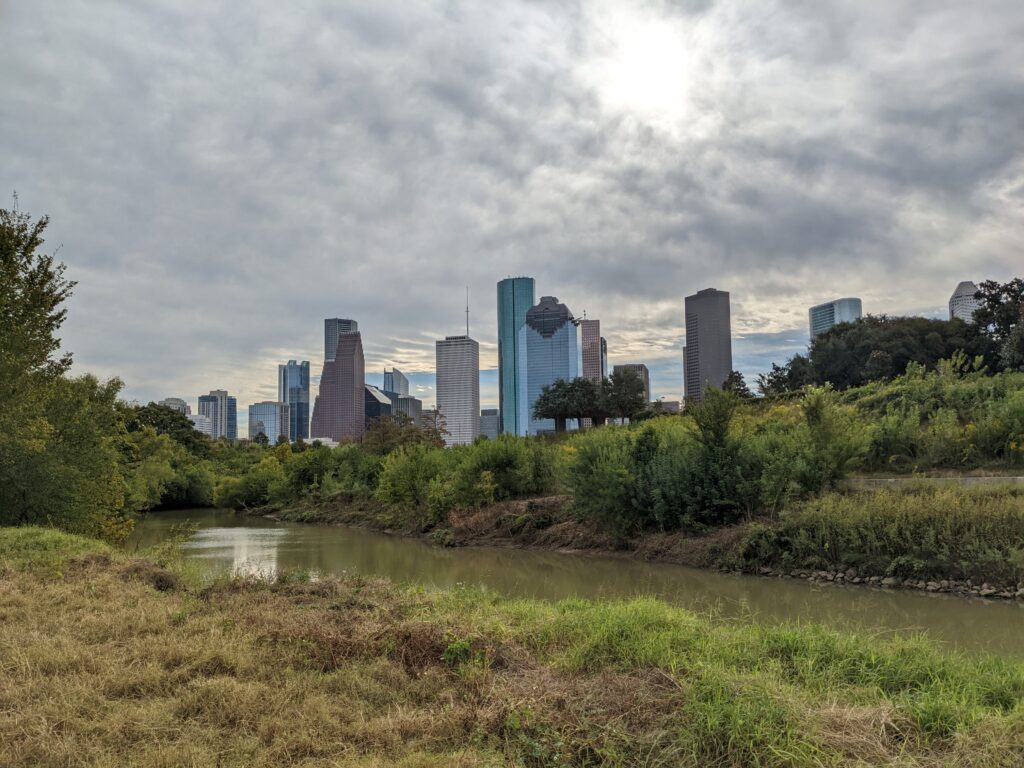
Greater Houston is shaped by an extraordinary network of bayous, wetlands, prairies, coastal waters. Communities formed along these waters, and the lives, histories and cultures of the people living here connect to them. Refineries, chemical plants, ports, and other industrial facilities were built alongside our communities, and too often, pollution and health risks are treated as the cost of living here. Industrial pollution harms waterways and ecosystems, limiting how safely people can enjoy them and impacting communities throughout the region. These harms concentrate and escalate around the Houston Ship Channel and similar industrial corridors, where residents carry an unfair share of the risk.
These are not risks we have to accept. Clean water, healthy communities, and thriving ecosystems are our right, and not something we should be forced to trade for limited economic benefits. Bayou City Waterkeeper works to prevent industrial pollution, strengthen public oversight, and ensure that communities have a meaningful voice in decisions affecting their water, health, and safety – prioritizing those who were harmed first and worst.
The challenge
Industrial pollution does not stop at the facility fence line
Industrial facilities discharge wastewater, store hazardous substances, dredge and alter waterways, and shape development along the Houston Ship Channel and Galveston Bay. Pollution can travel through bayous, wetlands, drainage systems, and coastal waters; this connects decisions made at individual facilities to the health of the entire watershed.
These risks are especially concentrated in communities that have experienced decades of industrial development and public disinvestment. Addressing them requires more than responding after contamination occurs. BCWK focuses on strengthening standards, scrutinizing permits, monitoring waterways, enforcing environmental laws, and ensuring residents can influence decisions before harm is done.
How we work
Enforce clean water protections
We use legal action and advocacy to hold industries and government agencies accountable under the Clean Water Act. Our work connects national pollution standards with the conditions experienced by communities and waterways across the Lower Galveston Bay Watershed.
Strengthen permitting and public participation
We review permits, submit public comments and legal briefs, and challenge processes that exclude community voices. Permits determine what industries may build, discharge, dredge, fill, or expand; meaningful participation can shape those decisions before their impacts become permanent.
Investigate emerging threats
Through community science and partnerships, we gather evidence about pollutants that may otherwise remain invisible. Monitoring helps us identify regulatory gaps, inform residents, strengthen advocacy, and build the case for greater accountability.
Advance community-informed policy
We advocate for stronger monitoring, enforcement, transparency, and public investment. That includes supporting agencies responsible for pollution control and helping communities understand and act on decisions affecting their waterways.
Connecting national protections to Houston’s waterways
In 2025, Bayou City Waterkeeper and a national coalition secured a major Clean Water Act victory when a federal court ruled that the Environmental Protection Agency had acted unlawfully by declining to update wastewater pollution standards for seven major industrial sectors.
Many of these industries operate along the Houston Ship Channel and Buffalo Bayou. Requiring EPA to reconsider decades-old standards could lead to stronger pollution limits, cleaner waterways, and greater accountability in Greater Houston and across the country.
Industries covered by the decision
- Petroleum refineries
- Organic chemical manufacturing
- Inorganic chemical manufacturing
- Plastics manufacturing
- Fertilizer manufacturing
- Pesticide manufacturing
- Nonferrous metals manufacturing
Permitting and your right to know
Many consequential environmental decisions happen in permit applications, technical reviews, public notices; many of these agency proceedings that are difficult to access and understand. However, these processes determine whether industries and public agencies may discharge wastewater, dredge waterways, fill wetlands, expand facilities, or undertake other activities affecting water and communities.
BCWK reviews proposed permits, submits comments and coalition letters, supports contested-case and other participation rights, and translates technical information into opportunities for public action. Our work has addressed refinery and petrochemical wastewater, port expansion, dredging, wetlands, federal water protections, and attempts to accelerate Clean Water Act permitting.
Wetlands capture sediment and can filter excess nutrients and other pollutants before they enter bayous, rivers, and bays. Their plants, soils, and microorganisms work together to support cleaner water throughout the watershed.
Intersections with other BCWK work
Industrial pollution cannot be separated from flooding, wetland loss, aging infrastructure, or climate change. A major storm can spread hazardous substances beyond an industrial site. The destruction of wetlands removes natural buffers between facilities, waterways, and neighborhoods. Weak water protections make it easier for pollution and development to affect the entire watershed.
BCWK connects these risks across our legal, policy, community science, and organizing work.
Accountability in industrial risk
Effective environmental protection depends on capable, transparent public institutions. BCWK advocates for adequate staffing, modern monitoring and laboratory systems, accessible pollution reporting, proactive inspections, and consistent enforcement.
We also work to ensure residents can see how decisions are made, understand what is happening in their neighborhoods, and hold both industries and government accountable.
Emerging Risk: Data Centers
Data centers that support cloud computing and artificial intelligence require large amounts of water and electricity to operate and cool their equipment. Demand often peaks during periods of extreme heat, when water supplies, public infrastructure, and the electrical grid are already under strain.
Rapid expansion also raises questions about transparency and equity. Texas lacks comprehensive public reporting of data center water use, making it difficult to understand their cumulative effects on regional water supplies, utility costs, flooding, and surrounding communities. Some proposed facilities may add new pressures near neighborhoods already burdened by industrial pollution, infrastructure disinvestment, and climate risks.
Bayou City Waterkeeper is advocating for policies that require greater disclosure, water-efficient technology, responsible infrastructure planning, and meaningful community participation in decisions about where and how these facilities are built.
Read Texas Living Water Coalition’s recommendations on data center regulations for Texas’ 90th Legislative Session here:
Read BCWK’s analysis and recommendations on Data Centers:
Emerging Risk: Desalination
Coastal desalination removes salt from seawater to create a new water supply, but the process can introduce serious ecological and economic costs. Intake systems can trap or kill fish larvae, eggs, and other marine organisms, while the discharge of highly concentrated brine can alter salinity, reduce oxygen levels, and introduce treatment chemicals into bays and estuaries.
Desalination also requires substantial energy and can produce water at a much higher cost than conservation and water-loss reduction. These impacts are especially concerning in the ecologically sensitive coastal waters of the Lower Galveston Bay Watershed.
Bayou City Waterkeeper advocates to keep desalination infrastructure and brine discharge out of our sensitive bays and estuaries. We advocate for rigorous, independent environmental review of proposed projects and strong protections for aquatic life. Conservation, repairing leaking infrastructure, and water reuse should be prioritized, with coastal desalination considered only after less harmful and more affordable alternatives have been fully explored.
Read Texas Living Water Coalition’s recommendations on desalination in Texas:
Help protect our watershed from industrial pollution
Everyone should be able to live near clean, healthy water without carrying an unequal burden of industrial risk. Join Bayou City Waterkeeper as we investigate pollution, defend public participation, strengthen environmental protections, and build community power across Greater Houston.