“Is the land a source of belongings or a source of belonging?” asks botanist and author Robin Wall Kimmerer.
At Galveston’s East End Lagoon, that question invites us to consider our relationship with the coast. Wetlands provide habitat for wildlife, help filter water, and buffer communities from flooding. They are also places to explore, learn, and build a connection with the landscape we call home. Spending time in them can deepen our understanding of what they sustain and our commitment to protecting them.
On Saturday, October 24, from 9 a.m. to noon, join Bayou City Waterkeeper and our Surge Forward coalition partners for a family-friendly Wetland Walk at East End Lagoon Nature Preserve in Galveston. Through a guided walk and a hands-on marine debris survey, participants will have the opportunity to explore the connections between healthy wetlands, community stewardship, and a safer coast.
Getting to know the wetlands that protect us
Wetlands are living parts of our coastal infrastructure. They absorb and temporarily store floodwater, filter sediment and pollution, and provide food and shelter for fish, birds, and other wildlife. Protecting these ecosystems helps sustain both the health of Galveston Bay and the communities connected to it.
These benefits are central to nature-based solutions: approaches that protect, restore, or work with natural systems to address challenges such as flooding and erosion. Preserving wetlands gives water room to move while maintaining habitats and places where people can connect with the coast.
Protecting wetlands also means looking closely at what happens when land is developed. Roads, fill, and excavation can change how water moves and separate connected habitats. Conservation areas, wildlife corridors, and restoration projects need clear standards, evidence of ecological benefits, and responsibility for maintaining those benefits over time.
As Houston conservationist and environmental educator Jaime González explains when discussing coastal prairie restoration, “We’re doing it so the land behaves differently for all of us.” His words capture a principle that also guides wetland protection: caring for natural systems can improve the conditions that people and wildlife depend on.

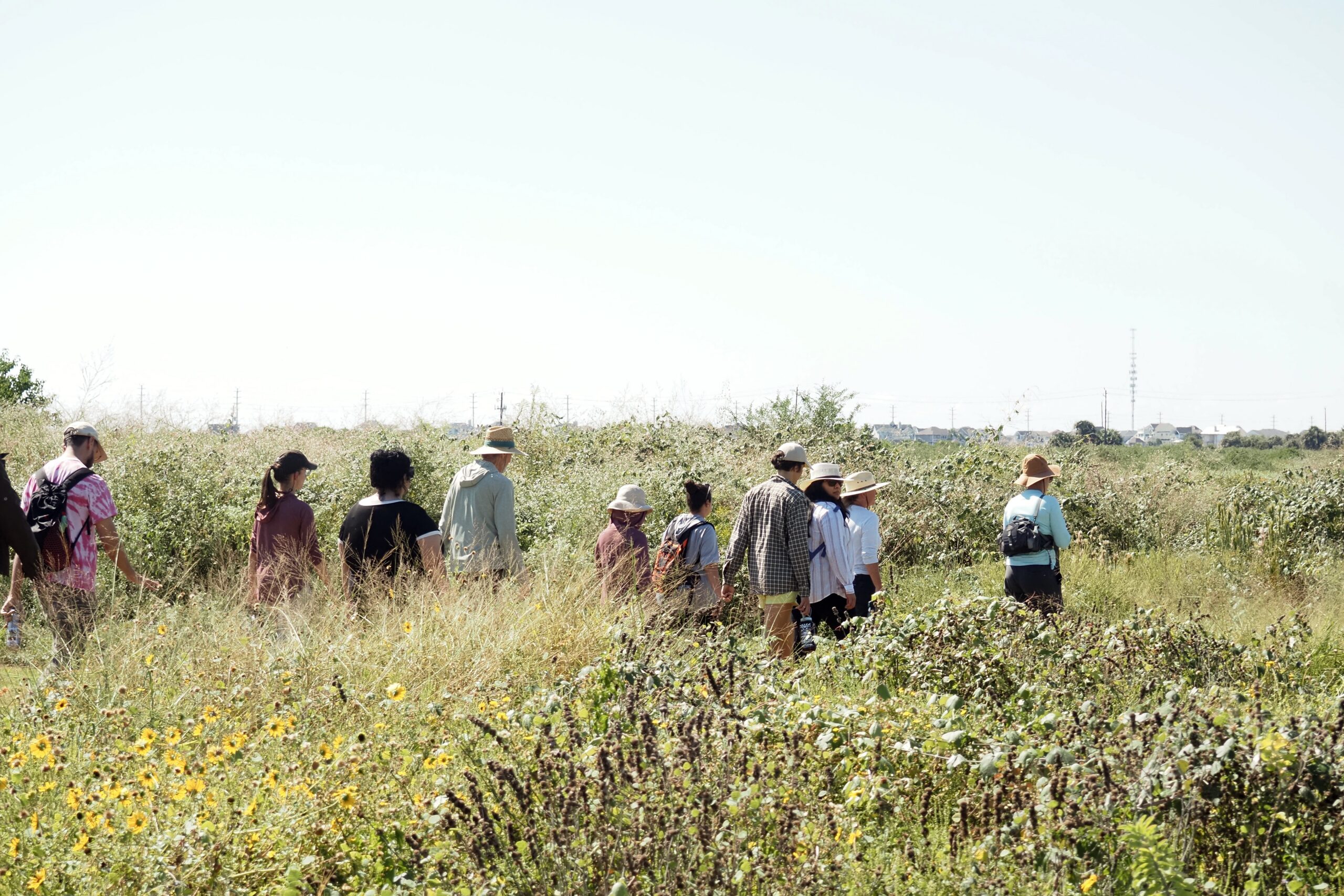
The walk will offer an opportunity to see these connections firsthand. Led by BCWK’s Alenka Cardenas, we’ll follow a short trail through the preserve to learn about wetland ecology, coastal resilience, and local wetland protection. Whether you regularly spend time outdoors or are just beginning to explore the wetlands near you, this is a chance to ask questions and learn alongside neighbors.
Participants will also join Turtle Island Restoration Network and the Coalition for Environment, Equity, and Resilience (CEER) for a marine debris survey and related stewardship activities on the adjacent beach. Smaller groups will rotate between the walk and survey so everyone has an opportunity to participate in both.
A broader vision for coastal resilience
The event is part of Surge Forward, a coalition of local and regional community organizations advocating for coastal protection that responds to the needs of the Houston-Galveston region. Coalition partners include Bayou City Waterkeeper, CEER Houston, Galveston Bay Foundation, National Wildlife Federation, and Turtle Island Restoration Network.

“If we want communities to have a real voice in coastal resilience, we have to create opportunities for people to learn from the land and engage with these issues in meaningful ways,” said Danielle Garcia Newton, Communications and Design Specialist at Bayou City Waterkeeper. “Communities deserve to experience these places firsthand, understand nature based solutions, and help shape what protection looks like.”
Surge Forward challenges the proposed Ike Dike, also known as the Coastal Barrier, as an insufficient response to the range of risks our communities face. The coalition calls for a broader approach that addresses major storms, industrial pollution, and infrastructure failures together.
That work includes advocating for the preservation of wetlands, prairies, and coastlines; stronger protections from industrial hazards; and decisions guided by the people most affected by flooding and storm surge. A resilient coast depends on healthy ecosystems and on communities having a meaningful voice in the policies and investments that shape their lives.
From connection to continued action
Getting to know a wetland can make its protection feel more immediate. A place we have walked, observed, and helped care for becomes part of our understanding of home and, hopefully, part of what we want to preserve for others.
BCWK is bringing lessons from our Galveston project reviews into Convene the Green’s recommendations for the City’s Comprehensive Plan update. Our input focuses on identifying wetlands before development decisions, securing enforceable conservation commitments, and making environmental review more transparent.
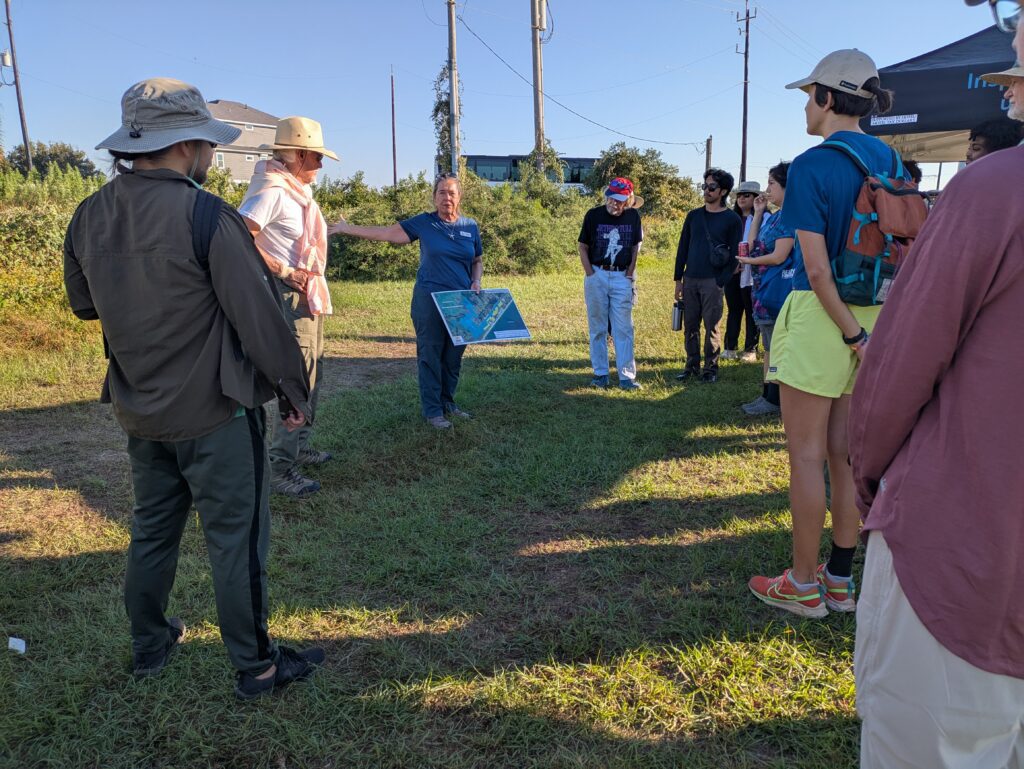
Throughout the morning, coalition partners will share resources, volunteer opportunities, community science programs, and ways to stay involved in coastal resilience efforts. With the 2027 Texas legislative session approaching, we want to connect participants with organizations developing coastal policy priorities and opportunities for public engagement.
Galveston’s wetlands connect the island to the broader region through water, wildlife, recreation, and livelihoods. Whether you live on the island or have another connection to it, share your perspective through Galveston Our Future’s online activities and Meeting in a Box materials. Describe the places you value, the changes you have observed, and the protections you want the Comprehensive Plan to support. Use the priorities below to explain, in your own words, how you want the City to protect wetlands.
What are the asks?
| Wetland protection priority | What you can ask the City to do |
| Protect wetlands across the island | Establish local protections based on habitat, drainage, and flood-storage functions, including for wetlands outside federal jurisdiction. |
| Identify impacts before approving development | Require current wetland and habitat assessments early enough to guide development decisions, including review of related phases and infrastructure. |
| Make conservation promises enforceable | Require defined boundaries, lasting protection, and maintenance responsibility for conservation areas and wildlife corridors. |
| Verify restoration benefits | Require evidence that proposed restoration improves ecological function, with measurable success criteria, monitoring, and corrective action. |
| Make decisions transparent | Provide public access to environmental studies, approved plans, and the conditions developers must meet. |
You do not need technical expertise to participate. Identify places you value, describe changes or drainage concerns you have observed, and explain why protecting those areas matters to you.
The walk is a starting point for those relationships. We hope participants leave with a deeper appreciation for nearby wetlands and a clearer sense of how to contribute to their protection, through stewardship, continued learning, and advocacy.
Plan your visit
- When: Saturday, October 24, 2026, 9 a.m.–noon.
- Where: East End Lagoon Nature Preserve and the adjacent beach survey site, Boddecker Road, Galveston, TX 77550.
- Parking: From Seawall Boulevard, turn onto Boddecker Road and continue approximately half a mile. Park in the third pull-off area; look for the ADA East End Lagoon Trail sign at the trailhead on the right.
- What to bring: Water, insect repellent, sunscreen, closed-toed walking shoes, and clothing appropriate for the weather.
- Free with registration
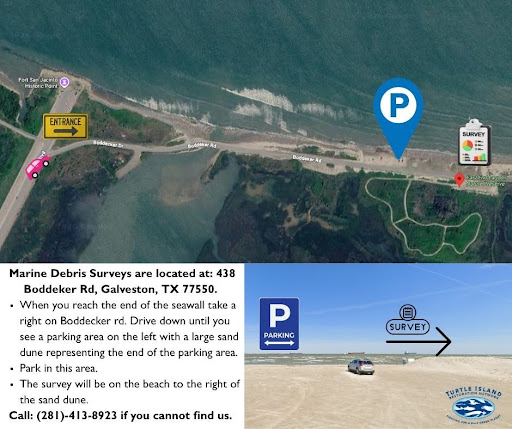
The preserve’s half-mile trail consists primarily of compacted soil with some small rocks. It has minimal shade and several benches. One accessible parking space and one accessible portable restroom are available; wind-driven sand may affect the parking space. The marine debris survey takes place across from the preserve on the beach.
Come spend a morning learning, caring for the coast, and connecting with neighbors working toward its future.