Bayou City Waterkeeper’s 2026 disinvestment update
Texas is making an unprecedented investment in water, but new funding alone will not undo decades of disinvestment. The public must have a meaningful role in deciding where that money goes, and funding should prioritize the communities carrying the greatest infrastructure and environmental burdens.
This update rounds up where our disinvestment work stands at the midpoint of 2026: the comments and testimony we’ve filed, the funding decisions taking shape right now, and how you can weigh in before they’re finalized.
What’s up with Prop 4?
Texas voters approved Proposition 4 on November 4, 2025, a historic commitment of up to $20 billion over 20 years to the Texas Water Fund. As we wrote before the election, our work “continues far after the ballot measure is approved.”
Prop 4 dollars won’t reach ratepayers until state fiscal year 2028 or 2029 at the earliest, according to the Texas Water Development Board (TWDB). In the meantime, the underlying crisis hasn’t paused: Houston the city faces a $9 billion federal wastewater consent decree rooted in generations of deferred maintenance in Black, Brown, and low-income neighborhoods, and Houston Public Works has said it may need up to $15 billion for critical repairs. Our Water Justice Zones, which are our tracked historically-disinvested communities with sewage overflows and other compounding environmental injustices, sit at the center of our ongoing advocacy for state funds flowing into our region.
In the fall, TWDB is expected to release a draft implementation plan spelling out how these funds will actually be used. We’re pushing for TWDB to hold onto discretion in how it allocates dollars, for funding to go first to the communities that need it most, and for water conservation to be recognized as the most secure new water supply Texas has.
Water we working on?
The decisions being made this year by state agencies and the next state Legislative Session will determine whether billions in public funding actually repair aging systems, lower the burden on communities that have endured repeated sewage overflows and flooding, and keep major new water users like data centers from passing their costs onto residents.
We’ve stayed closely engaged with TWDB throughout the year. We submitted comments on Texas Water Fund implementation plan to the legislature, urging TWDB toward longer public comment windows, plain-language summaries, proactive outreach to frontline communities, and improved disadvantaged-community scoring.
We also submitted comments on TWDB’s Nature-Based Solutions (NBS) Manual, now finalized. The guide is a promising step, and we’re connecting it directly to funding: we’re hoping TWDB increases NBS funding through the Flood Infrastructure Fund (FIF), and we’ll be advocating for that heading into the 90th Legislature.
River Network State Policy Showcase (March 2026): Our Senior Policy Analyst Usman Mahmood joined Mark Nardone of the Delaware Nature Society for River Network’s State Policy Showcase, comparing how Texas and Delaware built state-level water funding: Prop 4’s $1 billion-a-year commitment and Delaware’s Clean Water Initiative for Underserved Communities. It was a chance to put our fight for equitable outcomes and public accountability in Prop 4 spending alongside another state’s approach, and to bring back strategies we can use in Texas. You can watch the full webinar here.
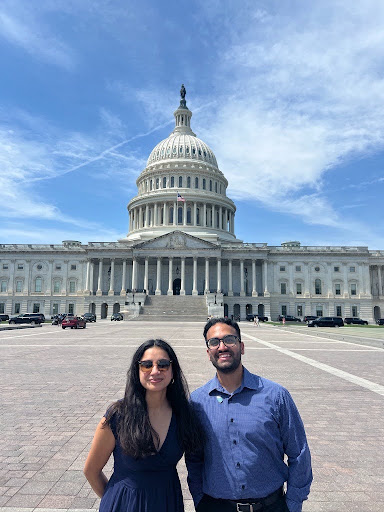
Water Week 2026 (April 2026): BCWK’s Policy Team was in Washington, D.C. again this year for the annual Water Week event to meet with Texas congressional delegation members, working alongside our Water Equity & Climate Resilience Caucus (WECR) and Southern SRF Advocacy Project partners. We told Houston-area offices – Representatives Al Green, Christian Menefee, Lizzie Fletcher, Sylvia Garcia, and Brian Babin, and Senator Cornyn’s office – that Texas needs an estimated $80 billion over the next 20 years for drinking water and wastewater infrastructure, and that current funding falls far short, even after state investments.
Federal dollars are the other half of the disinvestment fight: state funds from Prop 4 won’t flow immediately, while federal cuts threaten our existing state water funding programs, so our communities need federal support to bridge the gap now. We pressed for robust Clean Water and Drinking Water SRF funding, expanded technical assistance for communities navigating complex funding processes, permanent reauthorization of the federal LIHWAP program, and stronger disaster recovery programs for vulnerable communities.
Testimony to the Senate Committee on Water, Agriculture & Rural Affairs (May 2026). This was the first time BCWK has delivered in-person oral testimony directly to the Texas Legislature. We addressed two interim charges:
- Desalination: we testified that keeping desalination facilities and brine discharge out of bays and estuaries isn’t just an ecological necessity but the more cost-effective long-term choice, since brine damage to fisheries and water quality is expensive to remediate.
- Utility transfers: we testified on opposing the practice of moving money out of municipal water/wastewater funds to cover unrelated city expenses without oversight, at a moment when Houston conducted this move while still under its $9B consent decree.
Comments to the House Natural Resources Committee (June 2026). As part of the Committee’s interim charge hearings, we filed comments on three charges:
- Data center water use and conservation: urging legislators to mandate public water use reporting by data center facilities, eliminate non-disclose agreements, prioritize non-potable water sources and water efficiency measures, and ensuring data center developers pay their fair share rather than bringing costs down to residents who are not contributing to the industry’s rising electricity and water use demand (more below).
- HJR 7/SB 7 and Texas Water Fund implementation: pushing TWDB toward longer public comment windows (45-60 days), plain-language summaries, proactive outreach to frontline communities, better disadvantaged community scoring, a public project-level funding dashboard, continued prioritization of water reuse and loss mitigation over costly new supply sources, and a clear public timeline bridging the gap until Prop 4 revenue actually flows.
Data Centers: an accelerating divinestment risk
No other policy issue has moved this fast across Texas communities as the unregulated growth of data centers, particularly hyperscale campuses that demand intense water and energy use, receive sales tax exemptions, and raise pollution and water quality concerns. Texas data centers used an estimated 25 billion gallons of water in 2025, a figure that could climb to 161 billion gallons by 2030. For a region like ours, where “water abundance” can mask real vulnerability once you factor in flooding risk, aging pipes, and a growing consent decree bill, that growth is a direct threat to disinvested communities if costs get passed down to residents instead of the industry driving demand.
We have built our position in quick succession:
September 2026: Senate Committee on Water, Agriculture & Rural Affairs. BCWK appeared again at the Texas Capitol to provide written and oral testimony on the interim charge targeting water-intensive technologies, namely data centers.
April 2026: House State Affairs Committee. We submitted our first public comments on the data centers interim charge, flagging water and energy demand as issues the Legislature couldn’t treat as a side effect of “economic development.”
May 2026: Joint policy report with Texas Living Waters and HARC. We co-authored Balancing the Water Needs of Data Centers and Large Water Users in Texas with the State’s Vision for Long-Term Water Security, turning our initial comments into a full set of legislative recommendations grounded in HARC’s technical modeling.
June/July 2026: House Natural Resources Committee. We returned with formal written comments applying those same recommendations to the interim charge on data center water use and conservation, tying them explicitly to Texas Water Fund oversight.
What we’re anticipating through the rest of 2026
Active comment periods (act now)
Two public comment periods are open right now, and both directly shape whether disadvantaged communities get priority for funding:
- Clean Water and Drinking Water SRF Intended Use Plans (FY 2027): comments due September 18. We’re pushing for a multi-dimensional disadvantaged-community scoring system (modeled in part on Wisconsin’s approach), census-tract-level analysis instead of city-wide income averaging, a sliding scale for principal forgiveness (30-100%) tied to need, expanded technical assistance, and public dashboards tracking funding and outcomes. These are recommendations we’ve carried for several fiscal years now, alongside partners including PolicyLink, River Network, the Coalition for Equity, Environment, and Resilience (CEER), Rio Grande International Study Center (RGISC), West Street Recovery, and National Wildlife Federation.
- 2027 State Water Plan (Phase 2 draft): comments due September 25. The State Water Plan is Texas’ water planning process. It is built by all 16 regional planning groups and identifies thousands of strategies and projects to meet the state’s future water needs. Phase 2 of the plan is open for public comment through September 25.
Getting ready for the 90th Legislative session
The state budget: State leadership has issued budget instructions calling for a 3% base cut across state agencies. We’re watching closely to make sure those cuts don’t reach TWDB operations at a moment when the agency’s capacity is most needed: the Texas Water Fund, the SRF programs, and the new Water Supply and Infrastructure Grants (WSIG) program all at once. We expect an upcoming TWDB Legislative Budget Board hearing in October.
The Texas Water Fund draft implementation plan: We’ll be watching for real discretion for TWDB to operate and manage this program, ensure funding prioritizes the communities that need it most, and prioritize conservation efforts as critical water supply.
Further TWDB engagement. TWDB is running several major processes in parallel this year: the SRF Intended Use Plans, Phase 2 of the State Water Plan, the now-final Nature-Based Solutions Manual, and the one-time WSIG program created by HB 500: a $1.038 billion, 100%-grant program that has already drawn $6.9 billion in funding requests statewide, including a $55 million request from the City of Houston and millions more from utility districts across the Lower Galveston Bay Watershed’s counties.
Legislative engagement. With the 90th Legislature convening in January 2027, this year’s interim charge hearings are where the groundwork gets laid. We’ll continue submitting public comments and, where possible, oral testimony as committees examine Texas Water Fund implementation, data centers, and other major water-related policy areas. Every comment letter this year is also a preview of what we’ll bring to committee rooms and legislative meetings once the session starts.
What else is on the horizon? Beyond the funding fights, several emerging issues sit at the edge of our current advocacy and are likely to demand more attention heading into 2027:
- Hydrogen production facilities proposed for the region, which can be water and energy-intensive in ways that echo the same conservation and equity questions we’re raising about data centers.
- Carbon capture and sequestration projects proposed along the Gulf Coast, which raise questions about water use, groundwater protection, and permitting near our watershed’s existing industrial sites.
- Produced water reuse, treated oil and gas wastewater, which Prop 4-funded programs are authorized to support as a “new water supply,” even as questions about treatment, monitoring, and discharge remain unresolved.
How you can weigh in
- Stay in the loop: sign up for our mailing list to get alerts when comment periods open and hearings are scheduled.
- Submit a comment: the CW/DW SRF Intended Use Plans (due September 18) and the State Water Plan Phase 2 draft (due September 25) are both open right now.
- Show up: attend a TWDB or legislative interim charge hearing – we’ll share dates as they’re announced.
For questions about our policy work, contact Guadalupe Fernandez at guadalupe@bayoucitywaterkeeper.org or Usman Mahmood at usman@bayoucitywaterkeeper.org.